

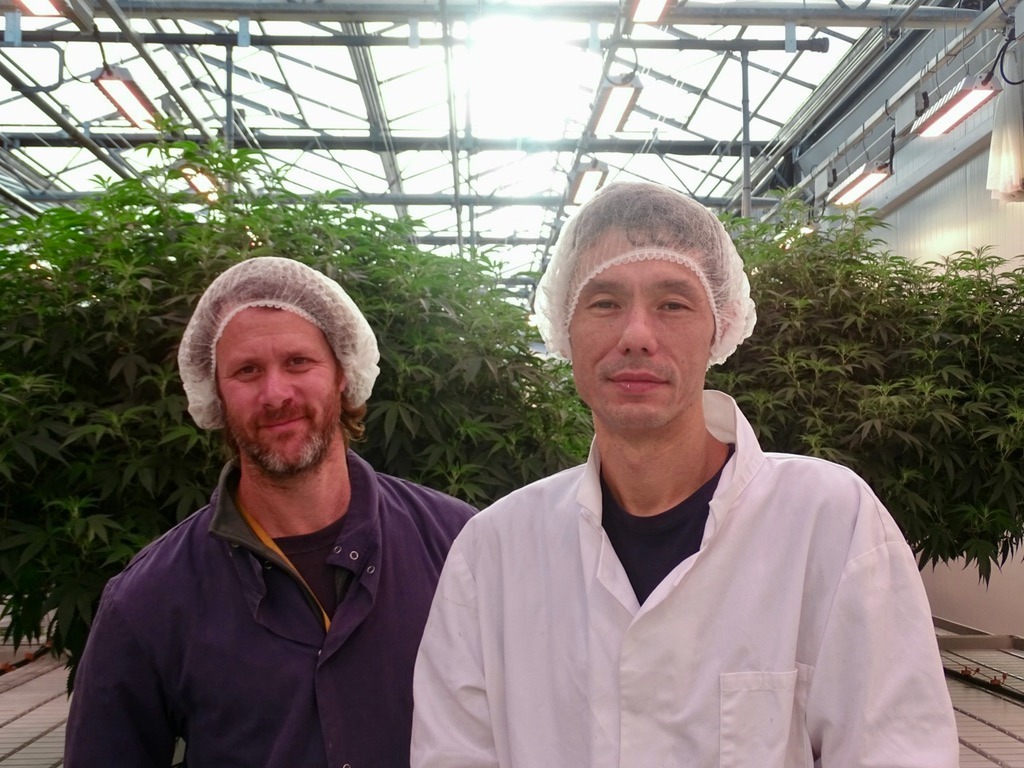
The CEO of Northern Leaf, Steven Tan, CEO has built an EU-GMP facility of around 9.300 square meters on Jersey, a British island in the English Channel. Audited in December 2022, Northern Leaf states to produce am annual volume of 10 tonnes. In light of the ongoing debate about GMP and GACP Steven discusses with krautinvest how to improve the quality of medical cannabis flowers – and how stricter regulation might affect supply and market developments.
krautinvest.de: We see tendencies that authorities want to stricter regulate GACP to GMPV conversion. However, this feels like Groundhog Day as we have heard this discussion for quite a while. Why might things get serious this time?
Steven Tan: I am not sure how serious it will get but in some ways, it does feel like Groundhog Day. This debate has been around for a long time. Four or five years ago, when Canadian cultivators were using GMP hubs in Europe, there was a lot of discussion about whether that amounted to ‘GMP washing’. At the time, there was quite a lot of noise around the issue, but that supply chain has continued to operate. What may be different now is the scale and complexity of the market. Demand has increased, the European market has matured, and there is a growing volume of product coming from third countries, where the level of regulatory oversight and supply chain control can vary significantly.”
krautinvest.de: How could authorities de-regulate the GACP-to-GMP process in Europe?
Steven Tan: I’d be cautious about the word “de-regulate”. For medicinal cannabis, the objective should not be less regulation, but clearer, more proportionate and more harmonised regulation. The current challenge is that the transition from GACP cultivation to GMP manufacture is interpreted differently across markets. Cannabis flower starts as an agricultural crop, but once it is harvested, dried, trimmed, packed and released for medicinal use, the expectations become pharmaceutical. Authorities could help the sector by defining more clearly where GACP ends, where GMP begins, and which activities must be performed under GMP control.
krautinvest.de: And in Europe?
Steven Tan: A better model would be harmonization across Europe: Clear expectations for cultivation, post-harvest processing, microbial control, analytical testing, batch release, stability, transport and traceability. That would reduce ambiguity without reducing patient protection.
krautinvest.de: Alternatively, could the market even regulate itself on the legal route?
Steven Tan: I don’t believe the market can or should fully regulate itself. Medical cannabis is a controlled medicine, so there must be regulatory oversight. However, the market can support higher standards through transparency, customer qualification, independent audits, robust technical agreements and clear disclosure of product origin, processing route and batch quality data.”
krautinvest.de: At the end it’s a question of quality and patient safety. What problems do you identify if you look at medical flowers marketed in Europe?
Steven Tan: The main issue I see is inconsistency. Medical cannabis flower sold in Europe can vary significantly in cultivation standards, post-harvest handling, microbial quality, age of material, processing route, testing approach and transparency of documentation. From a patient safety perspective, the key risks are microbial contamination, inadequate drying or storage, poor control of water activity, inconsistent cannabinoid content, pesticide or heavy metal contamination, inadequate foreign matter control, and insufficient traceability. There can also be a lack of clarity about whether the flower has been genuinely processed and released under GMP, or whether it has primarily been treated as GACP material and then converted later in the supply chain.
Another concern is the age and history of the flower. Patients, pharmacists and doctors may not always know when the material was harvested, how long it was stored, whether it was irradiated or otherwise decontaminated, where it was packed, and which laboratory performed the release testing. Medical cannabis should be treated as a pharmaceutical product. This means clear specifications, validated or justified processes, controlled environments, qualified suppliers, robust batch documentation, full traceability and a quality system capable of identifying and managing risk.
krautinvest.de: In the end it’s tough to compete for those GMP facilities in terms of pricing as long as they’re not involved in conversion themselves. Would another solution be more transparency? Meaning that at least patients, pharmacies and doctors understand where the product originates from and when it was indeed harvested?
Steven Tan: Transparency isn’t the only solution, but it is one of the most important. If a product is sold as a medicinal product, the supply chain should be able to explain where and how it was cultivated, where it was dried, trimmed and packed, where it was tested, who released it, whether it was irradiated or otherwise treated, when it was harvested, and what its shelf life is based on. This would help patients, doctors and pharmacists make more informed decisions. It would also create a fairer market because companies investing in genuine GMP infrastructure, controlled processing, high-quality testing and robust quality systems would be more clearly differentiated from lower-cost supply chains.
Price will always matter, but it shouldn’t be the only driver in a medicinal market. A cheaper product is not necessarily equivalent if the quality controls, traceability, freshness, microbial control or documentation are weaker. As such, the future European market should reward both compliance and transparency. Patients and healthcare professionals should be able to understand not only the brand name on the label, but also the product’s origin, processing history and quality status. That level of transparency would support patient safety and help raise standards across the sector. The variance in herbal medicine starting material makes this more important.
krautinvest.de: If indeed, we would see a strict order to run GACP and GMP at the same place, how would this affect the supply side in Europe, especially in Germany?
Steven Tan: This would have a major impact on the European supply side. In the short term, it would likely reduce the number of suppliers able to access the market. Many companies currently rely on a model where cultivation is performed in one jurisdiction and GMP conversion, testing, packaging or release is performed elsewhere. A strict same-site requirement would challenge that model and would probably remove some lower-cost supply from the market.
For Germany in particular, I would expect this to create a more selective supply base. Importers, pharmacies and distributors would need to rely more heavily on producers that have integrated cultivation and GMP processing capability, or on suppliers able to demonstrate a very robust and clearly controlled transition from GACP to GMP.
From a quality perspective, there are clear advantages. A vertically integrated GACP/GMP site gives better control over harvest timing, drying, trimming, environmental conditions, microbial risk, batch traceability and documentation. It reduces handovers and can make it easier to demonstrate who is responsible for each stage of the process. However, this would also increase costs and reduce flexibility. Building and operating GMP infrastructure is expensive, and not every cultivation region has the capital, regulatory environment or technical expertise to support that model. As such, any regulatory change would need to be proportionate and carefully implemented to avoid creating supply shortages or excessive price increases for patients.
krautinvest.de: Medical cannabis has already become a global market. The costs of cultivations depend among other things on local regulation and compliance, labor and energy costs or logistics. In which regions are cultivators able to compete in times of price compression?
Steven Tan: In a period of price compression, the most competitive regions would likely be those that can combine low production cost with credible pharmaceutical quality systems and reliable market access. Low-cost cultivation alone is not enough in the medical market. A supplier also needs regulatory credibility, validated processes, strong documentation, reliable testing, controlled storage, export capability and the ability to meet the expectations of European importers and authorities. Regions with favourable climates, lower energy costs and lower labour costs can clearly compete on cultivation cost. However, if the product then requires extensive remediation, long storage, repeated testing, complex logistics or later GMP conversion elsewhere, some of that cost advantage can be lost.
European producers have a different challenge. They may not always be the cheapest cultivators, especially where energy and labour costs are high, but they can compete through proximity to market, regulatory alignment, shorter supply chains, fresher product, better traceability and direct GMP control. I suspect the most resilient suppliers will not be the cheapest, but the most reliable. Winners will be producers that can consistently deliver compliant product, on time, with complete documentation, predictable quality and a transparent supply chain.
krautinvest.de: Medical cannabis flowers cannot be protected via patent. If you look at the whole value chain, what are the most interesting long term business opportunities?
Steven Tan: Long-term opportunities likely sit around quality, consistency, brands, data, genetics, formulation, supply-chain trust and regulatory capability. One important opportunity is genetics. While a flower product may not be patent-protected in the same way as a conventional pharmaceutical product, stable and well-characterised cultivars with consistent cannabinoid, terpene and agronomic profiles can still create commercial value.
A further opportunity is pharmaceutical-grade manufacturing. Companies that can control the full process from cultivation through GMP drying, trimming, packing, testing, release and stability will be better positioned as the market matures and expectations increase. There is also value in data. Medical cannabis still needs stronger evidence around product consistency, patient outcomes, prescribing patterns, tolerability and product performance. Companies that can generate credible real-world data and link it to well-controlled products may have a long-term advantage.
I also think there is opportunity in differentiated finished products. i.e. extracts, dose-controlled formats and other pharmaceutical presentations. Flower will remain important, but more standardised formats may become increasingly relevant as prescribers and regulators seek consistency. Finally, trust itself is a commercial asset. In a market where many products can look similar on price lists, cCompanies that can demonstrate transparency, compliance, quality history, reliable supply and strong documentation will be the ones that build durable relationships with doctors, pharmacies, distributors and patients.
About Steven Tan
Steven Tan is CEO of Northern Leaf, a medical cannabis producer based in Jersey in the Channel Islands. He has more than 15 years’ international experience in cannabis, with a background in cultivation, plant genetics and large-scale production. Since joining Northern Leaf in 2024, Steven has led a major turnaround, taking the company from near collapse to becoming a leading UK exporter of medical cannabis into Germany. The company operates one of Europe’s largest cannabis facilities and produces bulk medical cannabis API for export into international markets.